#345
FRI, JAN 28, 2022
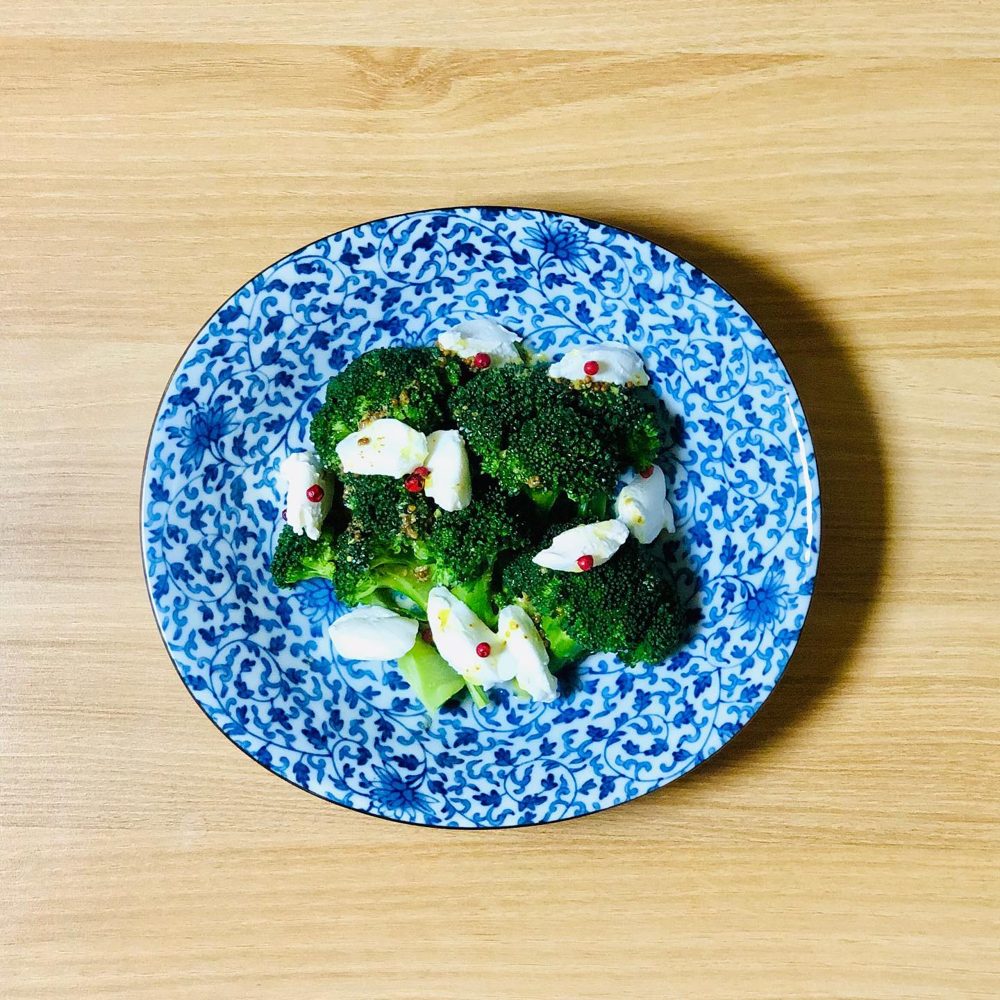
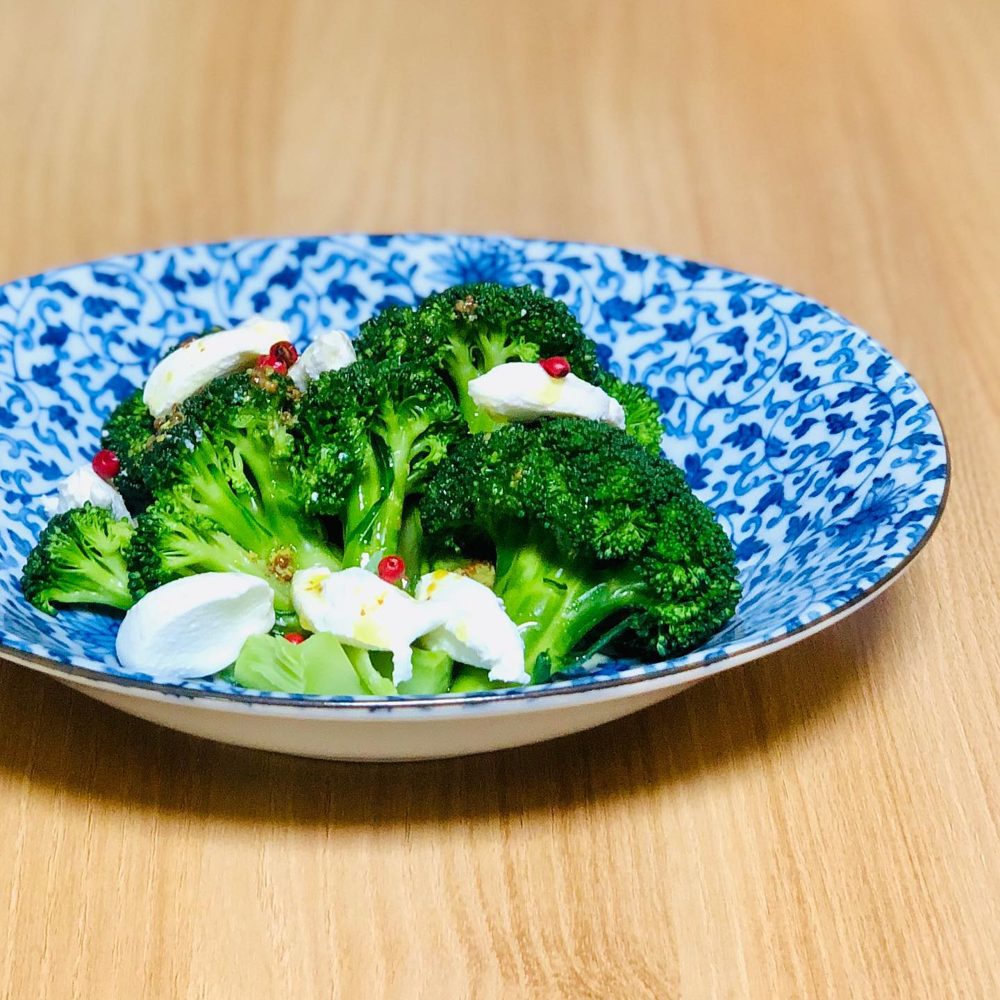
Broccoli Salad
Notes
20220128 #breakfastdiary 336, -8°C/crisp and clear, 10min/exercise
Blanch broccoli in salted boiling water. Serve with ricotta cheese and a vinaigrette dressing. #broccolisalad
Even without the shape of our mouths, we still communicate by mobilizing our eyes, foreheads, and our whole face. The value of so-called "nunchi" (reading the room through subtle cues) is growing, but even that isn't easy now that masks cover the area around the eyes too. Maybe that's why gestures are being used more than facial expressions these days, though they're harder to control as precisely as a face. Tone of voice gets mobilized too, but that also has its limits since masks muffle part of the voice. In particular, whispering or a low, soft tone and a smile — both effective at conveying emotion — are hard to get across through a mask. Because of masks, people end up having to raise their voices, and the mismatch between volume and content often creates an odd sense of dissonance.
Robert Fouser, Beyond an Age of Linguistic Distance
The point is that masks are having a major impact on how we use language. Just as the IMF crisis once completely reshaped our society's systems and ways of thinking, the use of masks will likely bring no small change to human life. That's because Homo sapiens is a species that has survived through communication (and cooperation).