D-67
MON, DEC 7, 2020
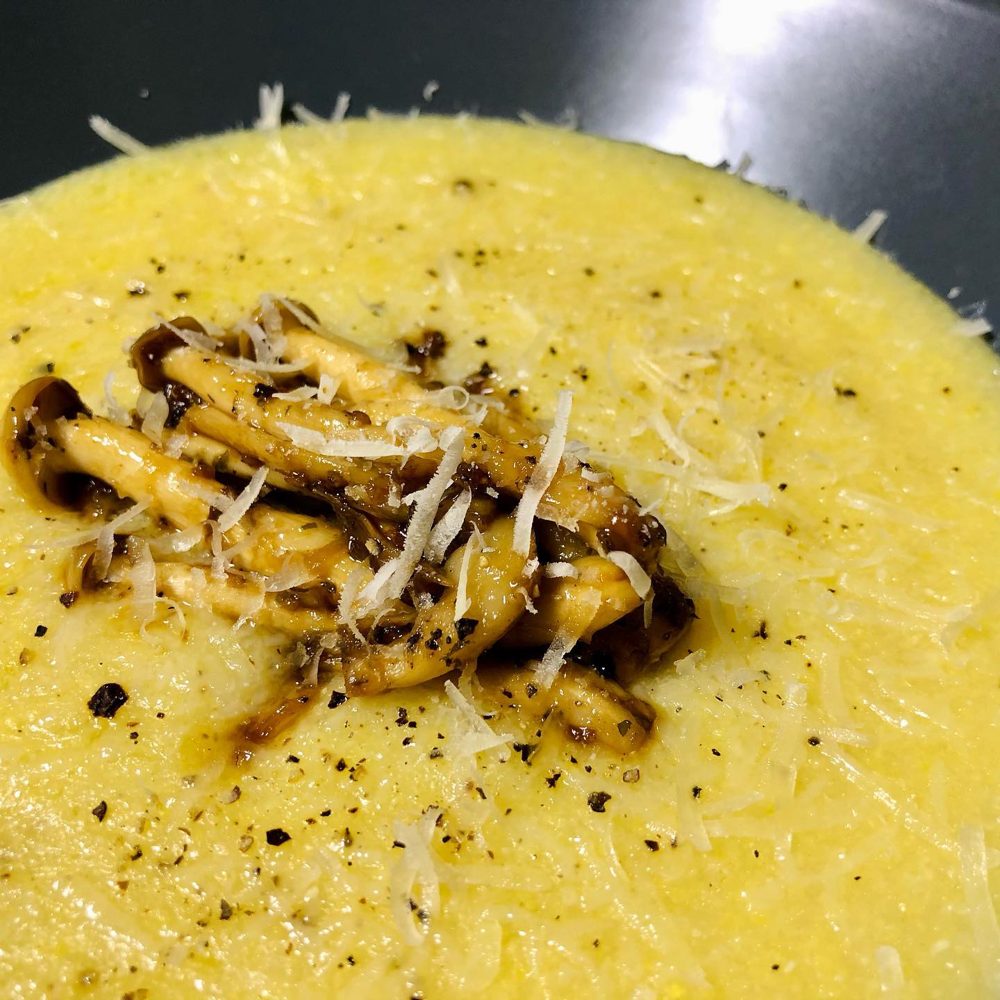
Polenta, Anyway: A Soft Polenta Breakfast
Notes
20201207, On the other end of the phone, Tomoko keeps going. 'Boil water, put in the gochujang, then the pork, the pork belly...' 'Wait, why does tteokbokki need pork in it?' A conversation I had a long time ago with a junior colleague who'd learned to make tteokbokki from a book (no idea which book, but apparently the recipe really did call for pork).
It's the same story for me (Jo-sik) with #polenta. All I really knew was that it's made from corn and that you just pour in water and boil it, roughly speaking — I'd never properly eaten it before, so every time I made it I wondered, 'is this actually what it's supposed to taste like?' As it happens, I stumbled onto a fairly detailed recipe on a blog last night.
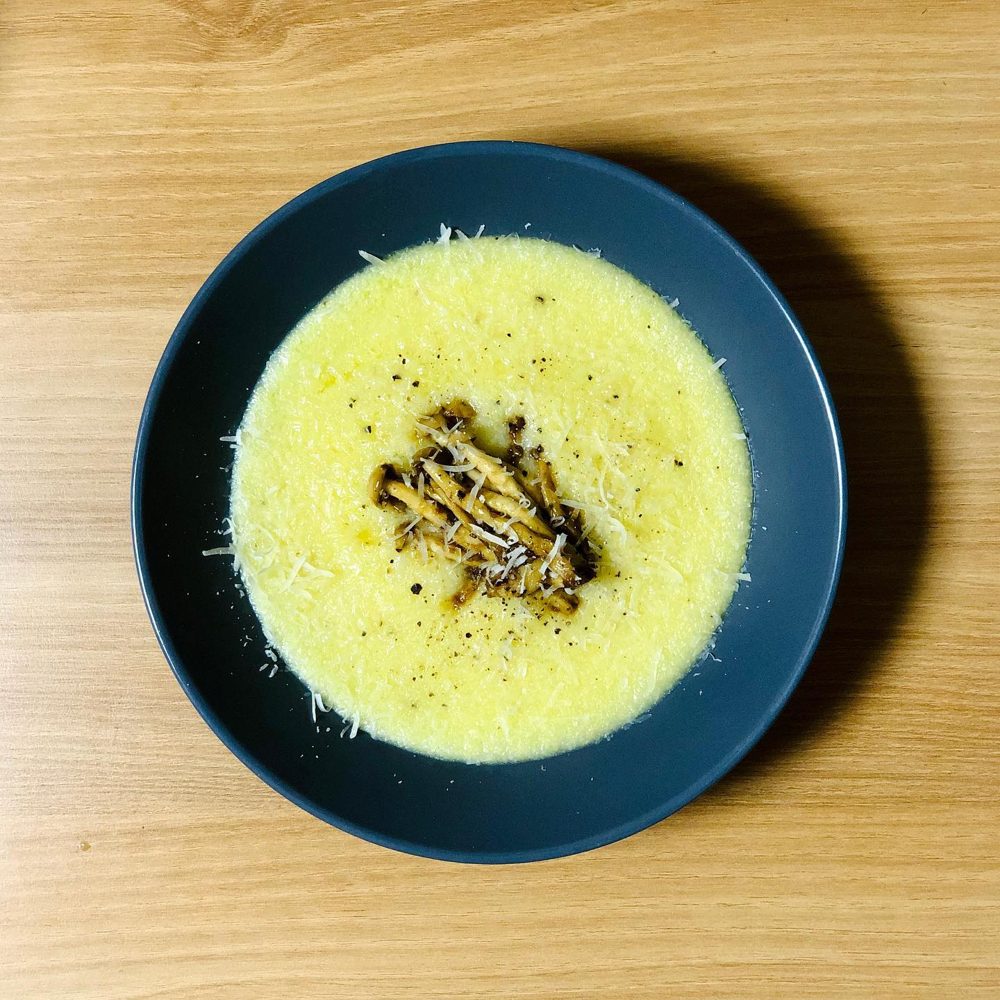
First, the mushrooms to go on top of the polenta. Melt butter in a pan, then sauté minced garlic followed by mushrooms. Once that looks about right, add a splash of balsamic and a little sugar and sauté a bit more. (Tasting it — sour, sweet, sort of both. Next time I'll just season it with salt instead.)
Now, let's make the polenta I found on the blog. Add salt to boiling water and drizzle in a spoonful of olive oil. (Important! The ratio of polenta to water is 1:4.) Stir in the polenta powder, then add cheese. Just like last time, it comes together almost anticlimactically fast. Top with the mushrooms and a drizzle of olive oil, more cheese, and pepper. A wonderful #softfood. #PolentaAnyway
*Reference: Naver blog, 'Rome's Palate, A Table Setting'