#496
WED, JUL 6, 2022
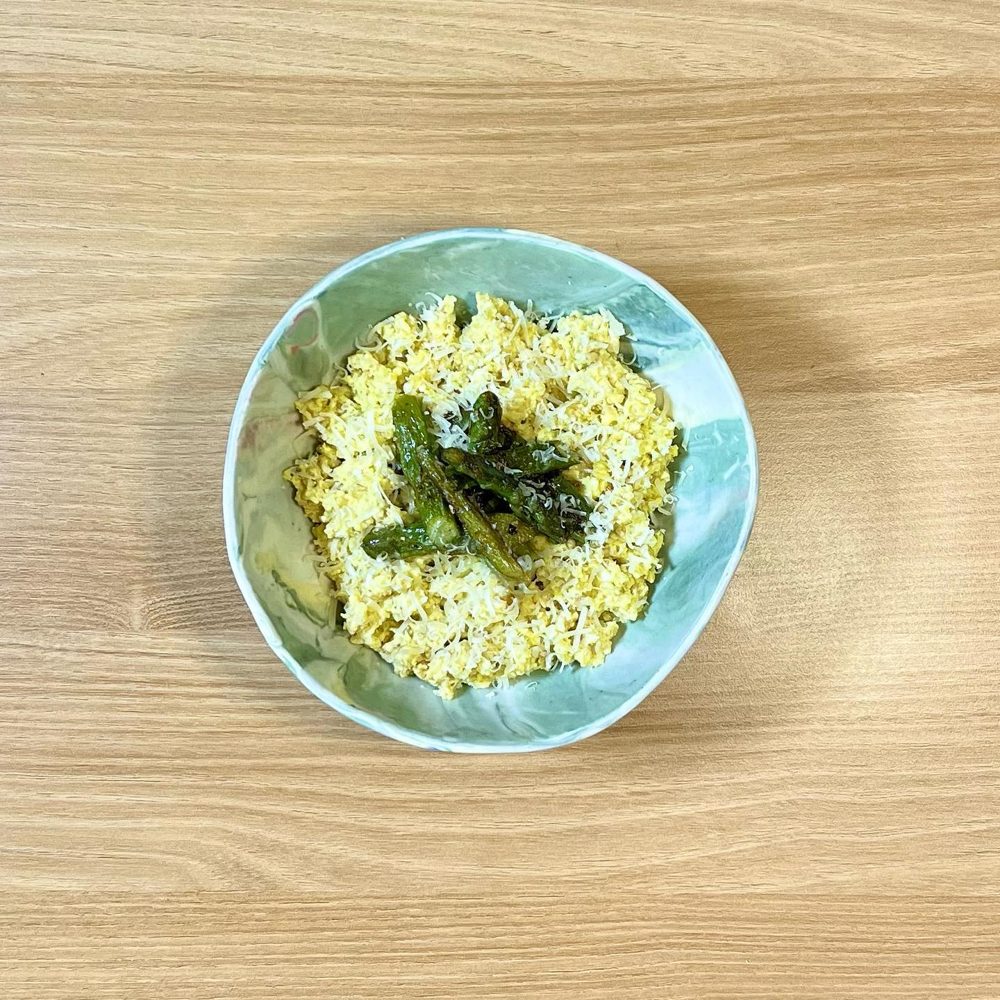
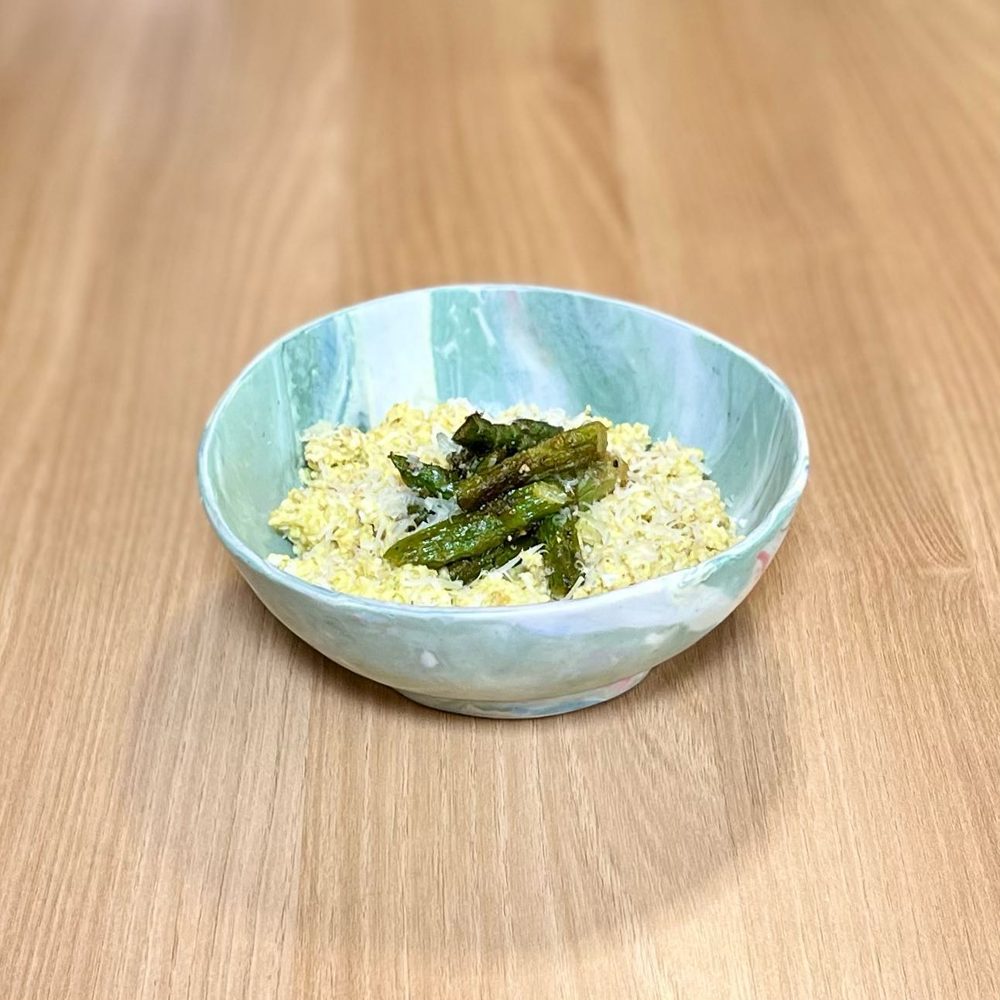
Asparagus Egg Oatmeal
Notes
20220706 #breakfastdiary 487, 28°C/mostly cloudy, 10 min/exercise
Make egg oatmeal with 2 eggs, half a cup of oats, one cup of water, and a pinch of salt.
Blanch asparagus in a hot pan with olive oil and lay it over the oatmeal — #asparagusEggOatmeal
Researchers at UC Riverside recently announced in the June issue of the journal Nature Food that they succeeded in developing a highly energy-efficient food production system by linking artificial photosynthesis with living organisms.
The researchers developed a highly efficient catalyst that uses light, water, and carbon dioxide to produce acetate through artificial photosynthesis. Acetate, made of just two carbon atoms, functions almost like a cure-all in living organisms.
They fed this lab-made acetate to a range of organisms — algae, yeast, mushrooms, lettuce, rice, rapeseed, and tomatoes. These organisms not only used the absorbed acetate as an energy source but also converted it into amino acids, sugars, and other biomolecules to grow and multiply. As a result, they thrived even without any light at all.
Kang Seok-gi, Can Artificial Photosynthesis Rescue Us From the Energy and Food Crisis?
In Jang Kang-myoung's #LetsBecomeATree, featured in #SeoulReviewofBooks, a 'green life surgery' implants photosynthesis-capable cells into the human body through genetic modification. Turns out it wasn't pure imagination after all,